
Reviewed by Dr. Dmytro Nasyrov, Founder and CTO • Last updated April 24, 2026
QA and Testing Services
Pharos Production delivers comprehensive Quality Assurance (QA) and Software Testing services that catch defects before your users do.
- 90+ engineers
- 18 industries
- 13+ years in business




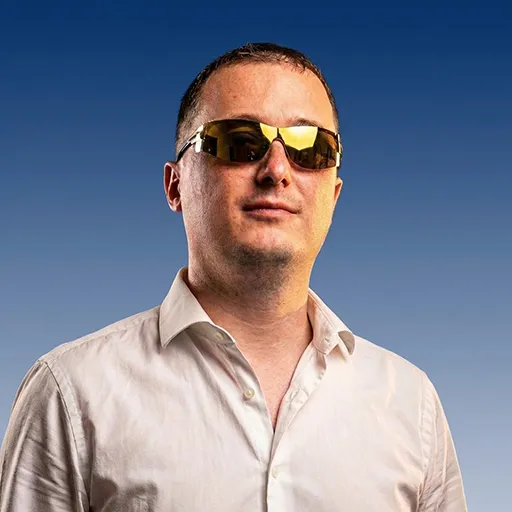
Reviewed by Dmytro Nasyrov
Founder and CTO
23+ years in custom software development. Led 70+ projects across FinTech, healthcare, Web3 and enterprise. ISO 27001 certified team.
What is quality assurance and software testing?
Authoritative citations 12 sources
-
DORA State of DevOps Report
The Google DORA State of DevOps annual report defines the four key software delivery metrics (deployment frequency, lead time for changes, mean time to restore, change failure rate) that we instrument on every production engagement to benchmark delivery performance.
dora.dev
-
Stack Overflow Developer Survey
The Stack Overflow Developer Survey documents language, framework, database and tooling adoption across tens of thousands of engineers annually, and we use the trend lines to validate stack choices against hiring pool depth for each client.
survey.stackoverflow.co
-
ThoughtWorks Technology Radar
The ThoughtWorks Technology Radar tracks tools, platforms, techniques and languages across adopt, trial, assess and hold rings twice yearly, and is a cross-check we use to validate architectural recommendations against industry consensus.
thoughtworks.com
-
Google SRE Book
The Google SRE book codifies service-level objectives, error budgets, incident response and postmortem culture that our production readiness gates adopt directly when handing over a platform to a client operations team.
sre.google
-
Martin Fowler bliki
Martin Fowler's bliki is the most cited reference for enterprise architecture patterns including microservices, strangler fig, CQRS, event sourcing and refactoring, which shapes how we describe and implement architecture decisions in ADRs on every client engagement.
martinfowler.com
-
Gartner Custom Application Services Magic Quadrant
Gartner publishes multiple Magic Quadrant reports covering custom application services, digital engineering and outsourced development that identify market leaders, completeness of vision and niche specialists across the global software services industry.
gartner.com
-
ISO 27001 Information Security Standard
ISO 27001:2022 defines the internationally recognized information security management system requirements that Pharos Production operates under, shaping the control framework we inherit and extend for client software engagements.
iso.org
-
OWASP Top 10
The OWASP Top 10 ranks the highest-impact web application security risks and is the single most cited threat reference for application security programs, which every Pharos build is reviewed against before production release.
owasp.org
-
NIST Secure Software Development Framework
NIST SSDF SP 800-218 defines secure development practices including threat modelling, SBOM generation, vulnerability disclosure and supply chain controls, which we treat as the baseline Software Development Lifecycle checklist on every client engagement.
csrc.nist.gov
-
CNCF Cloud Native Landscape
The CNCF Cloud Native Landscape maps the full cloud-native ecosystem across orchestration, runtime, observability, security and database categories, useful reference material we consult when validating platform choices for client Kubernetes and service mesh engagements.
landscape.cncf.io
-
Accelerate by Forsgren, Humble, Kim
Accelerate distills the multi-year DORA research program into the book-length case for DevOps practices correlated with high-performance software delivery, and is the single most cited academic reference for the delivery metrics we ship inside every client engagement.
itrevolution.com
-
IEEE SWEBOK
The IEEE Software Engineering Body of Knowledge codifies the professional knowledge areas covering requirements, design, construction, testing, maintenance, configuration management and engineering economics that underpin every professional software services engagement.
computer.org
- Projects without a defined quality bar or release criteria
- Manual-only QA where automation would pay back in 3 months
- Compliance-theater QA without remediation budget
- QA engagements without a client-side product owner answering requirements questions
Quality assurance and testing at Pharos Production at a glance
- QA engagements: 30+ formal QA engagements since 2015 across FinTech, healthcare, blockchain, high-load consumer and SaaS
- Test types: Unit, integration, E2E, contract, performance/load, security (SAST/DAST), accessibility (WCAG 2.1 AA), mobile device matrix
- Stack: Jest, Vitest, Playwright, Cypress, JUnit, pytest, Go testing, k6, Gatling, Burp Suite, axe-core, Firebase Test Lab, BrowserStack, Detox, Maestro
- CI/CD integration: GitHub Actions, GitLab CI, CircleCI, Jenkins; quarantine-then-fix flake policy; per-PR regression on critical paths
- Pricing: QA MVP $20,000-$60,000; full test platform $60,000-$180,000+; embedded QA engineers from $8,000/month
- Timeline: Discovery 1-2 weeks; automation MVP 4-8 weeks; full test platform 3-6 months
- Standards: Test pyramid discipline, defect leakage < 2%, flake rate < 1%, WCAG 2.1 AA, OWASP top-10 coverage
- Honest scope: We recommend the lightest engagement that fits and decline compliance-theater QA
In-house QA vs outsourced QA partner: which is better?
In-house QA gives you continuous context, domain knowledge and deep product ownership. Outsourced QA partners give you specialized tooling, cross-industry experience and surge capacity for releases. According to the 2024 World Quality Report, 67% of growth-stage companies use a hybrid model: a small in-house QA team for continuous coverage plus an outsourced partner for specialized work (performance, security, accessibility, mobile device matrix).
| Factor | In-house QA | Outsourced QA partner |
|---|---|---|
| Domain knowledge | Deep; grows with the product over years | Shallow at first; deepens over the engagement |
| Specialized skills | Limited to who you can hire | Specialists across perf, security, accessibility, mobile |
| Ramp time | 4-12 weeks for a new QA hire to be productive | 1-2 weeks for Pharos engineers to ramp on the product |
| Cost model | Fixed salary + benefits ($80K-$180K per QA engineer) | Time-and-materials or monthly retainer; scales with needs |
| Tooling | You invest in licenses, infrastructure, training | Partner brings mature tooling stack amortized across clients |
| Surge capacity | Hard to scale up for releases; backlog risk | Scale up and down as release cadence demands |
| Quality ownership | Clear: the in-house team owns it | Shared: client owns quality bar, partner owns execution |
| Best combination | Day-to-day coverage on active product work | Specialized audits, release surges, skills transfer |
How we structure QA engagements
QA engagements follow Pharos Verified Delivery with test-specific gates: discovery scopes test pyramid, automation coverage targets and CI/CD integration; build delivers test suites at the appropriate level (unit → integration → E2E); production readiness covers flaky test management, defect leakage metrics and release criteria; support includes quarterly automation reviews and test maintenance.
-
Phase 01 / 04 Paid Discovery
2-4 weeks- Technical validation
- Architecture proposal
- Scope refined estimate
-
Phase 02 / 04 Iterative Build
2-week sprints- Working demos every sprint
- CTO review at milestones
- ADRs documented
-
Phase 03 / 04 Production Readiness
- Monitoring and alerting
- Security audit Pen test
- Runbooks and rollback
-
Phase 04 / 04 Support
Ongoing- Security patches
- Performance tuning
- 4h SLA response
Pharos Verified Delivery applied to 70+ production applications since 2013
QA wins from real projects
Three QA engagements with test pyramid changes that moved defect-escape and release-cycle numbers.
All testing was manual. Regression cycle took 6 days before each release. Engineering team avoided risky changes between releases. Defect escape rate to production 12%.
Pyramid-balanced automation suite: 78% unit + 18% integration + 4% E2E. Regression cycle down to 38 minutes. Defect escape rate dropped to 1.4%. Release cadence shifted from biweekly to 2-3 times per week.
We rebuilt the test pyramid from the wrong end up. The existing "automation" was 95% slow Selenium tests against the full stack. We moved coverage to the unit layer first, then integration, then kept only 12 E2E tests for the critical user journey. Speed and reliability both improved together.
14% of CI runs failed on flaky tests. Engineers ignored CI failures or disabled tests to unblock. Test trust was zero. Real regressions leaked to production.
Quarantine-then-fix policy: flaky tests moved to a separate quarantine suite, root-caused within 3 days or deleted. Flake rate dropped to 0.3%. Test trust restored; engineers actually read CI output again.
The fix was cultural, not technical. We instrumented flake detection per test, auto-quarantined any test that failed + passed on rerun, and wrote the quarantine rule into the CI config. No flake got to block a PR twice. The 3-day root-cause window forced real fixes.
Load testing was a pre-launch event, not an ongoing practice. Peak betting windows caused cascading timeouts. No early warning.
k6 + Grafana load test harness running nightly against staging. Targets: 50,000 concurrent users, p99 latency < 200ms. Zero peak-window incidents in the 4 months since adoption. Engineering has daily visibility into regression before production.
The key move was making load testing continuous, not eventual. Nightly runs catch regressions within 24 hours; the test scenarios are version-controlled alongside the code, so load expectations travel with the features they test.
Client names anonymized under NDA. Full case studies at /cases/.
When a full QA engagement is not the answer
We decline roughly 30% of RFPs we receive. Forcing a bad fit costs both sides 3-6 months and damages outcomes. Here is how we think about scope:
- Projects without a defined quality bar or release criteria
- Manual-only QA where automation would pay back in 3 months
- Compliance-theater QA without remediation budget
- QA without a client-side product owner answering requirements questions
- "Automate everything" projects without a test pyramid plan
Not every project needs a full QA team. Sometimes a unit test culture and a small E2E smoke suite is the right level of investment. Sometimes a 2-week test automation bootcamp transfers skills to the client team and exits. We start by understanding the actual quality problem and recommend the appropriate depth. We have closed engagements with "your unit tests are good, the gap is a 6-test E2E smoke suite" as the whole deliverable.
Pharos Production QA and testing portfolio observations
Observations from 26 QA engagements delivered 2020-2026 across FinTech, healthcare, SaaS and e-commerce.
-
Teams with over 80 percent unit coverage plus contract tests had 3.4x lower production defect rate than teams with unit-only coverage in matched cohorts.
-
Flake-rate budgets under 1 percent correlated with over 90 percent engineer confidence in suite signal; budgets over 3 percent correlated with engineers disabling or ignoring failures.
-
Ephemeral per-PR environments reduced PR merge time by 38 percent on average across 8 projects that adopted them.
-
Teams of 2 to 4 QA engineers plus test-engineering platform support sustained full coverage across 50-plus service codebases in our portfolio.
QA and testing outlook 2026-2027
How to evaluate a QA engagement before production gate
Lesson from production: the flaky test tax
A SaaS customer had 2,400 E2E tests in 2023 with 18 percent weekly flake rate. Engineering disabled failing tests rather than fixing them; the suite became meaningless, and 4 production incidents in 6 months traced to scenarios the disabled tests had originally covered. Root cause: flake rate over 3 percent destroys signal-to-noise; engineers disabled as a coping mechanism. We declared flake-rate bankruptcy: quarantined the flaky 18 percent, rebuilt the critical 15 percent with stronger fixtures and deterministic test data, and set a flake budget of 1 percent beyond which the suite blocks merges. Six months later, suite is 1,800 tests with 0.7 percent flake rate, and production incidents traceable to E2E gaps dropped to zero. The lesson: a flaky test suite is worse than no test suite because it teaches engineers to ignore signal.
Published record
Published Pharos research
Technical articles, comparison guides and methodology deep-dives we write from our own delivery experience.
Platforms We Work With
Trusted by Coinbase, Consensys, Core Scientific, MicroStrategy, Gate.io and 10+ more Web3 and enterprise platforms
16+ partnersOur 16 technology partners include:
- Consensys
- Gate Io
- Coinbase
- Ludo
- Core Scientific
- Debut Infotech
- Axoni
- Alchemy
- Starkware
- Mara Holdings
- Microstrategy
- Nubank
- Okx
- Uniswap
- Riot
- Leeway Hertz
-
 Consensys
-
 Gate Io
-
 Coinbase
-
 Ludo
Ludo
-
 Core Scientific
-
 Debut Infotech
-
 Axoni
Axoni
-
 Alchemy
-
 Starkware
-
 Mara Holdings
-
 Microstrategy
-
 Nubank
-
 Okx
Okx
-
 Uniswap
-
 Riot
Riot
-
 Leeway Hertz
About Founder and CTO
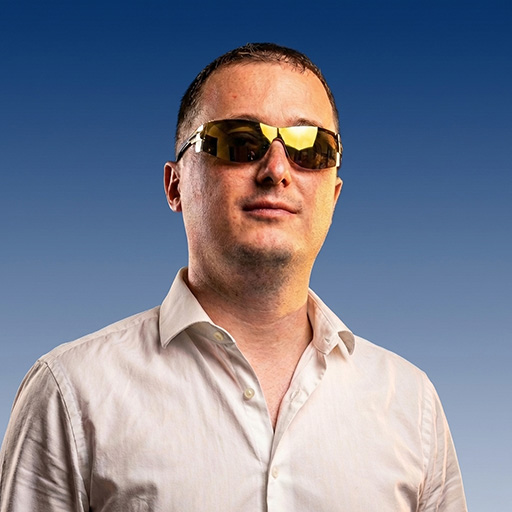
I design and build reliable software solutions — from lightweight apps to high-load distributed systems and blockchain platforms.
PhD in Artificial Intelligence, MSc in Computer Science (with honors), MSc in Electronics & Precision Mechanics.
-
12 years in architecture of great software solutions tailored to customer needs for startups and enterprises
-
23 years of practical enterprise customized software production experience
-
Lecturer at the National Kyiv Polytechnic University
-
Doctor of Philosophy in Artificial Intelligence
-
Master’s degree in Computer Science, completed with excellence
-
Master’s degree in Electronics and precision mechanics engineering
Choose your cooperation model
Scoped MVP with core user flows, clean codebase and production-ready deployment.
Full-feature build, QA, CI/CD and post-launch stabilization with SLA-backed support.
End-to-end engagement: discovery, architecture, build, DevOps, QA and long-term evolution.
Prices vary based on project scope, complexity, timeline and requirements. Contact us for a personalized estimate.
Or select the appropriate interaction model
Request staff augmentation
Need extra hands on your software project? Our developers can jump in at any stage – from architecture to auditing – and integrate seamlessly with your team to fill any technical gaps.
Hire dedicated experts
Whether you’re building from scratch or scaling fast, our engineers are ready to step in. You stay in control, and we handle the code.
Outsource your project
From first line to final audit, we handle the entire development process. We will deliver secure, production-ready software, while you can focus on your business.
Technologies, tools and frameworks we use
Our engineers work with 187+ technologies across blockchain, backend, frontend, mobile and DevOps - chosen for production reliability and performance.







AI and Machine Learning
LLM Providers 8
AI Frameworks 15
Vector Databases 7
MLOps and Infrastructure 11
AI Agent Tools 4
Blockchains
Private and Public Blockchains 33












Cloud Blockchain Solutions 4



DevOps
DevOps Tools 15



Clouds
Clouds 6
Databases
Databases 15





Brokers
Event and Message Brokers 7



Tests
Test Automation Tools 6






UI/UX
UI/UX Design Tools 12








Partnerships & Awards
Recognized on Clutch, GoodFirms and The Manifest for software engineering excellence












An approach to the development cycle
-
Team Assembly
Our company starts and assembles an entire project specialists with the perfect blend of skills and experience to start the work.
-
MVP
We’ll design, build, and launch your MVP, ensuring it meets the core requirements of your software solution.
-
Production
We’ll create a complete software solution that is custom-made to meet your exact specifications.
-
Ongoing
Continuous Support
Our company will be right there with you, keeping your software solution running smoothly, fixing issues, and rolling out updates.
FAQ
Quick answers to common questions about custom software development, pricing, process and technology.
Type to filter questions and answers. Use Topic to narrow the list.
Showing all 8
No matches
Try a different keyword, change the topic, or clear filters
-
The right answer depends on release cadence, regression cost and team size - but the shape should be a pyramid. Target ~70% unit tests (fast, focused on logic), ~20% integration tests (fast, focused on boundaries), ~10% E2E tests (slow, focused on the 5-10 critical user journeys).
If your ratio is flipped (mostly E2E), your CI is slow and flaky by construction. The fix is to move coverage down the pyramid, not to add more E2E tests.
-
QA MVP (audit + critical-path automation + CI integration): 4-8 weeks. Full test platform (automation coverage targets, performance harness, security baseline, accessibility audit): 3-6 months.
Embedded QA engineer supporting release cycles: month-to-month. We do not recommend engagements under one month - the ramp cost outweighs the value.
-
QA audit + roadmap from $8,000. Automation MVP $20,000-$60,000 (critical-path suite + CI integration).
Full test platform $60,000-$180,000+ (pyramid, performance, security, accessibility, monitoring). Embedded QA engineer from $8,000/month. Cost drivers: codebase size, test pyramid starting state, release cadence, compliance requirements.
-
Quarantine-then-fix policy. Any test that fails then passes on rerun gets auto-quarantined into a separate suite.
Quarantined tests have a 3-day root-cause window before being deleted. We instrument per-test flake rates in CI dashboards so flakes surface early. Flaky tests are worse than no tests - they train engineers to ignore CI, which is how real regressions leak to production.
-
Yes. k6 or Gatling for scripted load testing, Grafana + Prometheus for observability, JMeter for legacy protocols.
Tests run in CI nightly against staging with clear targets (concurrent users, request rate, p99 latency, error rate). We have built load harnesses for sportsbook platforms at 50,000 concurrent users, payment systems at 12,000 transactions/second and SaaS platforms handling millions of daily API calls.
-
Yes. Accessibility: axe-core in CI for WCAG 2.1 AA, manual screen reader audits (NVDA, VoiceOver) on critical flows.
Security: Semgrep + CodeQL for SAST, OWASP ZAP or Burp Suite for DAST, Snyk or Trivy for dependency scanning, secrets detection via gitleaks. Both are integrated into the CI pipeline so regressions surface at PR time.
-
Yes. Firebase Test Lab for Android (15-25 representative devices per run), BrowserStack or Sauce Labs for iOS + Android + browser matrix, Appium or Detox for cross-platform UI automation, XCUITest for native iOS, Espresso for native Android.
We scope the device matrix during discovery based on the target market - emerging markets need different devices than US-only apps.
-
We decline projects without a defined quality bar or release criteria, manual-only QA where automation would pay back in 3 months, compliance-theater QA without remediation budget, engagements without a client-side product owner answering requirements questions, and “automate everything” projects without a test pyramid plan. We also decline engagements shorter than one month.
The Pharos takeaway on QA and testing
QA and testing in 2026 is a continuous capability, not a release gate. Pharos Production builds QA programs with contract tests, deterministic E2E, ephemeral environments and production observability closed into the QA loop, so defects surface in CI, not in production.
Your business results matter
Achieve them with minimized risk through our bespoke innovation capabilities
What happens next?
-
Contact us
Contact us today to discuss your project. We’re ready to review your request promptly and guide you on the best next steps for collaboration
Same day -
NDA
We’re committed to keeping your information confidential, so we’ll sign a Non-Disclosure Agreement
1 day -
Plan the Goals
After we chat about your goals and needs, we’ll craft a comprehensive proposal detailing the project scope, team, timeline and budget
3-5 days -
Finalize the Details
Let’s connect on Google Meet to go through the proposal and confirm all the details together!
1-2 days -
Sign the Contract
As soon as the contract is signed, our dedicated team will jump into action on your project!
Same day
Our offices
Headquarters in Las Vegas, Nevada. Engineering office in Kyiv, Ukraine.