
















































Digital Transformation ROI: How to Measure and Maximize Returns
Digital transformation ROI measurement guide. Frameworks, metrics, industry benchmarks and strategies to maximize returns from digital initiatives.

Reviewed by Dr. Dmytro Nasyrov, Founder and CTO • Last reviewed August 20, 2026
Pharos Production offers Digital Product Management services that bridge the gap between business strategy and technical execution.

Practice led by Dmytro Nasyrov
Founder and CTO
23+ years in custom software development. Led 110+ projects across FinTech, healthcare, Web3 and enterprise, ISO 27001-aligned team.
 docs.aws.amazon.com
Embedded PM engagements run as a lightweight commitment: discovery defines the product surface and success criteria; the embedded PM joins client ceremonies from day one; regular check-ins with Pharos engagement manager; handoff when a permanent PM is hired or the engagement scope closes.
Pharos Verified Delivery applied to 110+ production applications since 2013
Three engagements where Pharos embedded product managers helped startups and mid-market teams ship more deliberately.
Founder-led product with no PM. Roadmap changing weekly based on customer calls. Engineering burned out on constant context switches.
Pharos PM embedded at 15 hours per week for 7 months. Roadmap stabilized around 3 outcome-driven bets. Engineering velocity recovered; team morale improved measurably.
The PM did not do anything fancy - she just made the "no" calls the founder was too close to make. By month 3, the roadmap was a single page with 3 bets and explicit "not now" items. Engineering knew what they were building and why.
Internal PM team needed surge capacity for a major launch. Hiring a full-time PM would have taken 4 months; launch was in 3.
Pharos PM embedded for the 3-month launch window. Launch shipped on time with all 4 core features. Internal PM team stayed focused on post-launch iteration.
Surge PM engagements work well with clear scope. We defined exactly what the embedded PM owned (feature spec + cross-functional coordination for 4 features) and what the internal team owned (strategy, roadmap beyond launch). No ambiguity meant no friction.
Engineering team strong but no formal product discovery process. Features shipped, some landed, some did not.
Pharos PM embedded for 6 months, introducing continuous discovery, user research cadence and outcome-based roadmap planning. Feature success rate up from 40% to 78%.
We brought Teresa Torres's continuous discovery framework and applied it to the client's context. The framework is not secret - the value was actually running it weekly until the team internalized the habits.
Client names anonymized under NDA. Full case studies at /cases/.
We decline roughly 30% of RFPs we receive. Forcing a bad fit costs both sides 3-6 months and damages outcomes. Here is how we think about scope:
Embedded PM is the right call for pre-PMF startups, surge capacity during launches and organizations that want to introduce PM practices without committing to a full-time hire yet. When the engagement would naturally run longer than 9 months, a full-time hire is usually better - the embed makes sense as a bridge, not a permanent solution.
Pharos product management portfolio
Observations from 12 product management engagements 2020-2026 across B2B SaaS, FinTech, healthcare SaaS and vertical SaaS portfolios.
9 of 12 products we inherited had no shipped PQL definition. Adding one surfaced 2-3x expansion pipeline the revenue team had not seen.[12]
Feature kill rate averaged 7% on inherited roadmaps. Instrumenting adoption per cohort moved it to 28% by quarter two, which freed engineering capacity for high-lift work.
Activation uplift on engagements that rebuilt onboarding against a named first-value event averaged 18 percentage points month over month.
Privacy and security artefact debt (DPIA, data map, SOC 2 mapping) was missing on 8 of 12 products. Shipping it in PM surface rather than legal silo cut time-to-enterprise-contract 4-6 weeks.[9]
Digital product management outlook 2026-2027 pivots from roadmap-driven cadence toward outcome-tied discovery with embedded analytics and per-tenant experimentation in every SaaS surface.
Outcome-tied PM contracts (NRR, activation rate, feature adoption as primary KPIs) replaced feature-count roadmaps in scaled SaaS teams.[1]
Product-led growth instrumentation (activation, expansion, PQL scoring) became the default discovery layer rather than a premium add-on.[12]
Per-tenant experimentation with feature flags plus cohort analytics replaced site-wide A/B tests in B2B SaaS because tenant variance broke global significance thresholds.[3]
SOC 2 plus privacy-by-design PM artefacts (DPIAs, data maps, retention policies) moved into the PM surface rather than staying in legal silos.[9]
Evaluate a product management function at the 90-day mark using this 8-point check before you scale team or roadmap commitments.
North-star metric defined with numeric baseline, target and cadence of review.
Activation, retention and expansion funnels instrumented per tenant cohort.[3]
PQL definition shipped and validated against a live cohort within 60 days.
Feature flag and experimentation platform live with at least 3 active per-tenant experiments.
Named user interviews per week, insights logged and triaged.
DPIA per major surface, data map, SOC 2 control mapping.[8]
PM and engineering RACI documented; escalation pathway for scope debt.
Quarterly outcome review with revenue leader, not only internal PM review.
Production post-mortem
The engagement covered a vertical HR tech product with 410 tenants and 38k seats. The original roadmap optimized feature count per quarter. Month 4 NRR was 98% and activation held at 41%. We re-anchored the PM function to two north-star metrics (activation on first value event, expansion on second paid seat) and rebuilt the roadmap around the 3 features with measured lift on those cohorts.[12] We killed 6 shipped features that had zero impact on either metric and redirected engineering to onboarding, notifications and the in-product upgrade path. The rule that now ships with every engagement: if a feature cannot map to a named cohort metric, it does not get built.
Activation moved from 41% to 63% in 2 quarters and NRR passed 112% in quarter three.
Published record
Technical articles, comparison guides and methodology deep-dives we write from our own delivery experience.
Trusted by Coinbase, Consensys, Core Scientific, MicroStrategy, Gate.io and 10+ more Web3 and enterprise platforms
16+ partnersOur 16 technology partners include:
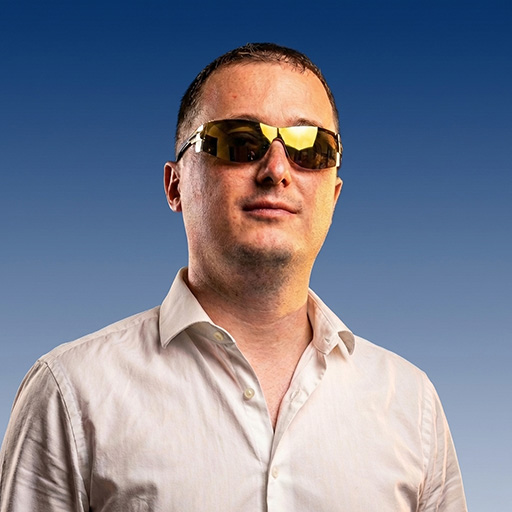
Founder and CTO Pharos Production
I design and build reliable software solutions - from lightweight apps to high-load distributed systems and blockchain platforms.
PhD in Artificial Intelligence, MSc in Computer Science (with honors), MSc in Electronics & Precision Mechanics.
13 years in architecture of great software solutions tailored to customer needs for startups and enterprises
23 years of practical enterprise customized software production experience
Lecturer at the National Kyiv Polytechnic University
Doctor of Philosophy in Artificial Intelligence
Master's degree in Computer Science, completed with excellence
Master's degree in Electronics and precision mechanics engineering
Pharos Production scopes engagements in three tiers, Discovery workshop, Strategic engagement and Transformation program, with typical budgets from $3,000 to $50,000+ depending on scope and complexity.
Current-state audit, use-case validation and strategic roadmap for your leadership team.
Deep-dive assessment, technology selection, architecture blueprint and phased implementation plan.
Full advisory retainer covering strategy, delivery oversight, governance and change management.
Prices vary based on project scope, complexity, timeline and requirements. Hourly rates range from $50 to $99 depending on role and seniority. Contact us for a personalized estimate.
Need extra hands on your software project? Our developers can jump in at any stage - from architecture to auditing - and integrate seamlessly with your team to fill any technical gaps.
Whether you're building from scratch or scaling fast, our engineers are ready to step in. You stay in control, and we handle the code.
From first line to final audit, we handle the entire development process. We will deliver secure, production-ready software, while you can focus on your business.
Our engineers work with 187+ technologies across blockchain, backend, frontend, mobile and DevOps - chosen for production reliability and performance.
Our engineers work with 187+ technologies across 10 categories: Frameworks, AI, Blockchains, DevOps, Clouds, Databases, Brokers, Tests, Programming, UI/UX.



































































Recognized on Clutch, GoodFirms and The Manifest for software engineering excellence








65+ industry awards
Our company starts and assembles an entire project specialists with the perfect blend of skills and experience to start the work.
We'll design, build and launch your MVP, ensuring it meets the core requirements of your software solution.
We'll create a complete software solution that is custom-made to meet your exact specifications.
Our company will be right there with you, keeping your software solution running smoothly, fixing issues and rolling out updates.
Digital transformation ROI measurement guide. Frameworks, metrics, industry benchmarks and strategies to maximize returns from digital initiatives.

Synthesis of published software economics data: build cost ranges by project type, Year-2 maintenance cliff, mobile breakage tax, cloud lock-in cost trajectories - drawn from Flyvbjerg and Budzier (Harvard Business Review), ISO/IEC 25010, the Google SRE Book and ThoughtWorks Technology Radar.

Synthesis of public tech-DD data: M&A engagement cost ranges, architecture red-flag patterns, buy-vs-build decision outcomes, vendor RFP scoring effectiveness - drawn from ISO/IEC 25010, IEEE 29148, TOGAF, McKinsey, Gartner and named industry cohort.

Digital product management guide 2026 covering the discipline, discovery and strategy, roles (PM vs PO vs delivery lead), agile process, metrics that matter, cost and engagement models including embedded product management and where AI genuinely helps in 2026.

MVP development cost in 2026 covering honest ranges by complexity, the hours-times-blended-rate model behind every vendor quote and the hidden costs that show up after launch.

PoC vs MVP vs prototype explained as three different questions rather than three sizes of the same build, with real cost ranges and a decision framework for which to build first.

Fixed price vs time and materials explained for founders: why 81% of development companies prefer T&M, the hidden risk premium inside a fixed bid and how to read a quote before you sign.
Type to filter questions and answers. Use Topic to narrow the list.
Showing all 7
No matches
Try a different keyword, change the topic or clear filters
Digital product management is usually billed monthly, with a fractional or part-time product manager starting around $6,000 per month and a dedicated full-time PM running higher based on seniority. Cost depends on whether you need a standalone PM driving strategy or an embedded PM working inside your existing team, plus the product's complexity and stage.
A product manager defines product vision, gathers and prioritizes requirements, writes user stories and runs sprint planning with engineering. Day to day they balance stakeholder input, customer feedback and data to decide what gets built next, then track delivery, remove blockers and measure whether shipped work moved the metrics it was meant to.
We apply RICE, ICE and MoSCoW depending on the decision. RICE scores features by reach, impact, confidence and effort for roadmap planning, ICE offers a lighter weight version for fast triage and MoSCoW sorts scope into must-have, should-have, could-have and won't-have for release planning and stakeholder alignment.
A standalone PM owns the product independently, setting strategy and roadmap while coordinating with your stakeholders. An embedded PM joins your existing team and works inside your processes, tools and rituals to fill a capacity gap or add product discipline. We offer both models so you can match the engagement to your current structure.
We write user stories in the standard as-a, I-want, so-that format with clear acceptance criteria, then size and prioritize them into a groomed backlog. Stories link to the broader product goals they serve, carry definition-of-done checks and flow through agile sprints with regular refinement so engineering always has ready, well-scoped work.
We run fixed-length sprints with planning, daily standups, review and retrospective ceremonies, maintaining a prioritized backlog and a clear sprint goal. The PM protects scope, tracks velocity and burndown and surfaces risks early. Retrospectives feed continuous process improvement so the team's delivery predictability increases sprint over sprint.
Companies bring in product management help when engineering is building without a clear roadmap, when stakeholder requests outpace the team's capacity to prioritize or when a product needs vision and discovery it currently lacks. An external PM adds structure quickly without the hiring lead time, then can hand off to an internal hire later.
Product management earns its multiple only when it ties engineering investment to measured business outcomes per cohort, not when it ships on time against a roadmap nobody funded with discovery data. Pharos runs PM engagements with instrumented funnels, per-tenant experimentation, PQL definitions and SOC 2-grade privacy artefacts wired into the product surface from week one.[1]
Book a 30-minute product management audit call
Achieve them with minimized risk through our bespoke innovation capabilities
Contact us today to discuss your project. We're ready to review your request promptly and guide you on the best next steps for collaboration
Same dayWe're committed to keeping your information confidential, so we'll sign a Non-Disclosure Agreement
1 dayAfter we chat about your goals and needs, we'll craft a comprehensive proposal detailing the project scope, team, timeline and budget
3-5 daysLet's connect on Google Meet to go through the proposal and confirm all the details together!
1-2 daysAs soon as the contract is signed, our dedicated team will jump into action on your project!
Same dayHeadquarters in Las Vegas, Nevada. Engineering office in Kyiv, Ukraine.
We also work with clients through dedicated local teams in Las Vegas, New York and San Francisco.
Thanks for the request!
We typically reply within 24 hours